


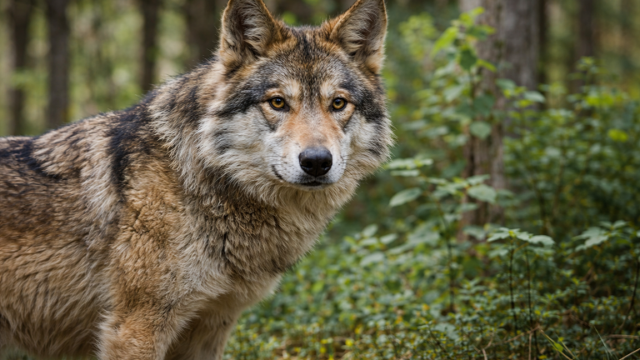
DEMING – Wildlife officials in Arizona and New Mexico report the endangered Mexican gray wolf population in the Southwest climbed to 319 animals in 2025, an increase of 33 wolves from the previous year.
The growth marks continued progress for a species that was completely eliminated from the wild just decades ago. Conservation advocates say the rising numbers are encouraging, but stress that population size alone does not signal true recovery.
Biologists and environmental groups warn that genetic diversity among the wolves remains dangerously low. The current wild population descends from just seven founding wolves, and experts say fewer than one-third of that original genetic diversity remains. Federal and state removals of wolves tied to livestock conflicts, including the deaths of several genetically valuable animals last year, have further weakened the gene pool.
Wildlife advocates also point to concerns about inbreeding and the limited transfer of genetic diversity from captive wolves into the wild. Studies show captive populations retain significantly more genetic variation, and experts argue that releasing bonded family groups from captivity has proven far more successful than placing captive-born pups into existing wild dens.
Despite the challenges, conservation groups say the increase in wolf numbers shows the recovery effort is working, though slowly. Many caution against any effort to reduce or remove Endangered Species Act protections, arguing the species remains vulnerable to political decisions, habitat pressures, and human-caused mortality.
Under the current recovery plan, the Mexican gray wolf could be evaluated for possible delisting only after the population averages roughly 320 wolves for eight consecutive years and additional genetic benchmarks are met. Scientists emphasize that meeting a numerical target does not automatically mean the species is out of danger.
Environmental groups say long-term recovery will depend on stronger protections, improved genetic management, healthy forest ecosystems, and policies that allow wolves and human communities to coexist across the Southwest.