

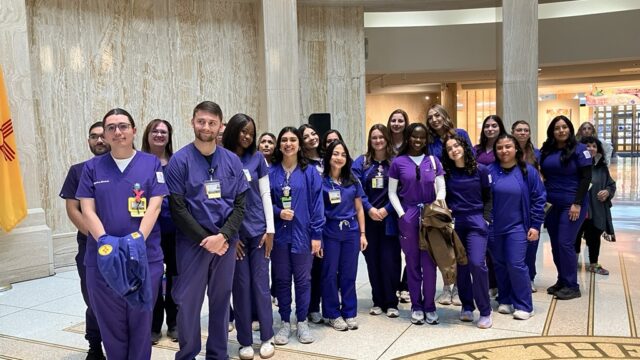
DEMING — Western New Mexico University nursing students from the Silver City and Deming campuses recently stepped beyond the classroom and into the legislative arena, traveling to Santa Fe to engage directly with state lawmakers. The experience offered students an in-depth look at the legislative process and highlighted the growing role nurses play in shaping healthcare policy beyond direct patient care.
The visit was designed to expose students to how bills are drafted, debated, and passed, helping demystify government processes that often influence medical practice. Students described the experience as both informative and eye-opening, particularly in understanding how policy decisions translate into real-world impacts within the healthcare system.
A major focus of discussion involved the financial realities of healthcare, including state budgeting and the rising cost of medications. Students gained insight into how fiscal decisions at the legislative level affect patient access and outcomes. Several participants noted the persistence and coordination required to successfully advocate for policy change, emphasizing that effective lobbying demands strategy and sustained effort.
One of the highlights of the trip was a mock trial based on a real-world scope-of-practice issue involving radiology nurses and restrictions on ultrasound use. Through the simulation, students observed how lobbyists, legal arguments, and judicial outcomes can directly influence the daily responsibilities of healthcare professionals.
The visit also provided valuable networking opportunities, allowing WNMU students to interact with nursing students from other institutions across New Mexico. These conversations revealed differences in nursing education approaches, particularly regarding ethics. While some students reported memorization-based instruction of the Nursing Code of Ethics, WNMU students explained that their program emphasizes practical application. Both Deming and Silver City students noted that at WNMU, ethical principles are actively integrated into cohorts and practicum experiences, reinforcing ethical decision-making in real clinical situations.
Silver City nursing student Keana Huerta, who also serves as a student member of the WNMU Board of Regents, said the experience expanded her understanding of healthcare leadership. She noted that the visit revealed the depth and scope of policymaking and how broadly it influences healthcare, extending far beyond bedside care.
Another Silver City student shared that the experience broadened her professional perspective, emphasizing that nurses must advocate not only for individual patients but also within legislative settings where systemic change is determined.
Deming campus students echoed similar reflections, citing the experience as eye-opening in showing how closely intertwined law and medicine are. One student emphasized the collective strength of the nursing profession, describing advocacy as the result of “thousands of voices working together” toward common goals.
Although not all nursing students were able to attend the Santa Fe visit, WNMU ensured learning objectives were met across campuses. Students who remained in Deming and Silver City completed a detailed module on effective advocacy through letter-writing campaigns. By researching legislators and lobbyists and crafting evidence-based communications, students developed practical advocacy skills and sharpened their critical thinking.
The combined experience of legislative engagement and targeted advocacy training reinforced a central lesson for WNMU nursing students: modern healthcare extends beyond clinical practice, requiring informed voices willing to champion change at every level.
